
Is It Safe to Stack Tirzepatide & Retatrutide? Here’s What You Should Know
So… Can You Actually Combine These Two?
If you’ve been spending any time in the GLP-1 space lately, you’ve probably seen people talking about stacking tirzepatide and retatrutide. Some say it’s the next level for weight loss, while others warn against it completely. The reality sits somewhere in between. Stacking these two isn’t automatically unsafe, but it’s also not something where more equals better. What really matters and what most people skip over, is how they’re actually being used.

At a basic level, both medications affect similar systems in your body, especially the ones tied to appetite, blood sugar, and metabolism. Research on GLP-1–based medications shows they can support weight loss and metabolic health when used appropriately. But those same studies also show that increasing the dose doesn’t always improve results. In many cases, it just increases side effects like nausea or digestive discomfort (Wilding et al., 2021). That’s why the real question isn’t just whether you can stack them, but whether it actually makes sense for your situation.
The Part Most People Miss: Dose Changes Everything
One of the biggest misunderstandings online is treating stacking like it’s one fixed approach. In reality, there’s a huge difference between combining lower, adjusted doses and simply layering two full-strength protocols on top of each other.
If someone is already taking a full dose of tirzepatide and then adds a full dose of retatrutide, that’s where things can start to feel off. Your body only has so much capacity to respond to these signals. Once those pathways are already activated, adding more doesn’t necessarily create better results. Sometimes it just overwhelms the system and leads to more side effects without much added benefit.
Why People Even Consider Stacking in the First Place
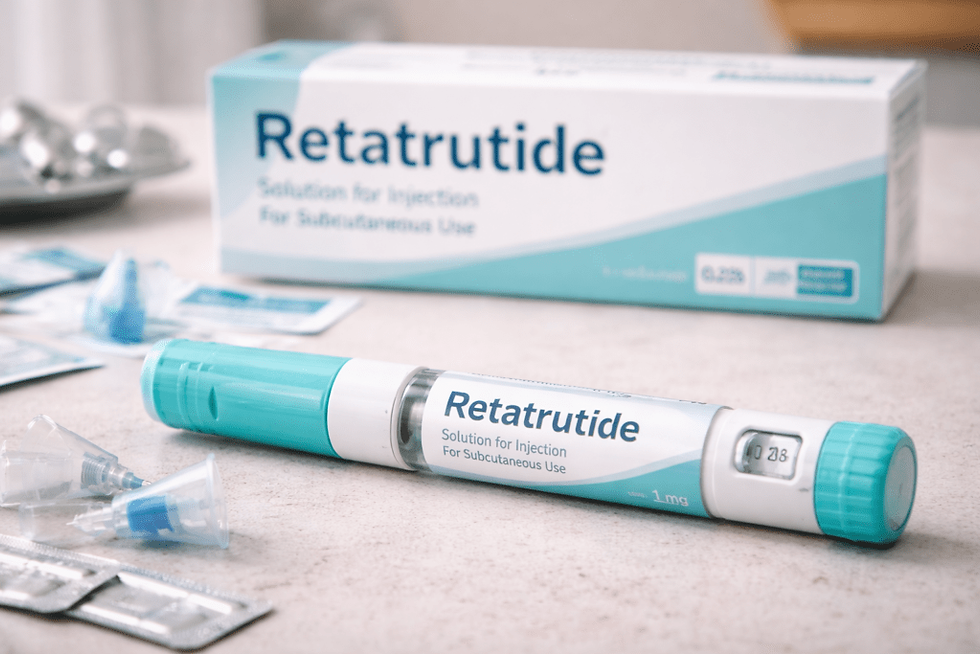
Part of the reason this topic keeps coming up is because these medications don’t work in exactly the same way. Tirzepatide is mainly known for helping reduce appetite and improving blood sugar control through GLP-1 and GIP receptors. Retatrutide, which is still being studied, adds another mechanism tied to how your body uses stored energy.
That difference is what makes people think they might complement each other. One helps you eat less, while the other may help your body use energy more efficiently. On paper, that sounds like a strong combination. But in practice, it doesn’t automatically mean combining them will lead to better or faster results.
What the Research Actually Shows
There’s a lot of fear online about GLP-1 medications causing long-term harm, but the research paints a more balanced picture. When used at appropriate levels, these medications have been shown to support things like blood sugar control and overall metabolic function.
Some studies suggest they may even help protect insulin-producing cells and reduce certain types of cellular stress. That said, these findings are based on controlled, therapeutic use. They don’t necessarily apply to high-dose combinations or experimenting without a clear plan.
Where Things Can Start to Go Wrong
Most of the issues people run into aren’t because the medications themselves are inherently harmful. It’s usually how they’re being used. When doses climb too high or multiple compounds are combined without adjusting anything, side effects tend to build up.
That can show up as ongoing nausea, low energy, digestive discomfort, or just feeling generally off. There’s also the chance that your body becomes less responsive over time when it’s constantly being pushed too hard, which can lead to frustrating plateaus.
The “More Is Better” Trap
It’s easy to assume that combining two powerful options will double your results, but biology doesn’t really work that way. In many cases, people get better and more sustainable outcomes by finding a level that works and sticking with it.
Once you pass a certain point, increasing the dose doesn’t always move things forward. Sometimes it just makes the process harder to maintain because of side effects or inconsistency.
What You Don’t Feel Still Matters
Another piece that often gets overlooked is that not everything shows up right away. You can feel fine day-to-day while your body is still adapting in the background. That’s why it’s important to look at patterns over time instead of just relying on how you feel in the moment.
Energy levels, appetite, digestion, and consistency all give you a better picture of what’s actually going on than quick results alone.
So, Is It Safe or Not?
The most honest answer is that it can be safe in certain situations, but not in the way it’s often being talked about online. It’s not about combining as much as possible. It’s about being intentional and understanding that your body isn’t going to reward you just for doing more.

For some people, combining approaches might make sense. For others, it may not add anything at all. It really depends on how it’s done and what your body actually needs.
There’s a lot of noise around GLP-1 medications right now. Some people treat them like a miracle, while others make them sound dangerous. The truth is more balanced. They can be incredibly helpful tools, but they still depend on how you use them.
If you’re thinking about stacking tirzepatide and retatrutide, it’s worth slowing down and asking whether you’re improving your approach or just trying to speed things up. Most of the time, the people who get the best long-term results aren’t the ones doing the most. they’re the ones doing what works and staying consistent with it.


Comments