
How To Prevent “GLP-1 Face”
If you’ve been online lately, you’ve probably seen endless conversations about “GLP-1 face.” People post dramatic before-and-after photos, celebrity transformations, and stories about suddenly looking older after losing weight. Naturally, that makes people nervous. A lot of people start these medications hoping to feel healthier and more confident, so the idea of looking tired or gaunt afterward can feel really discouraging.
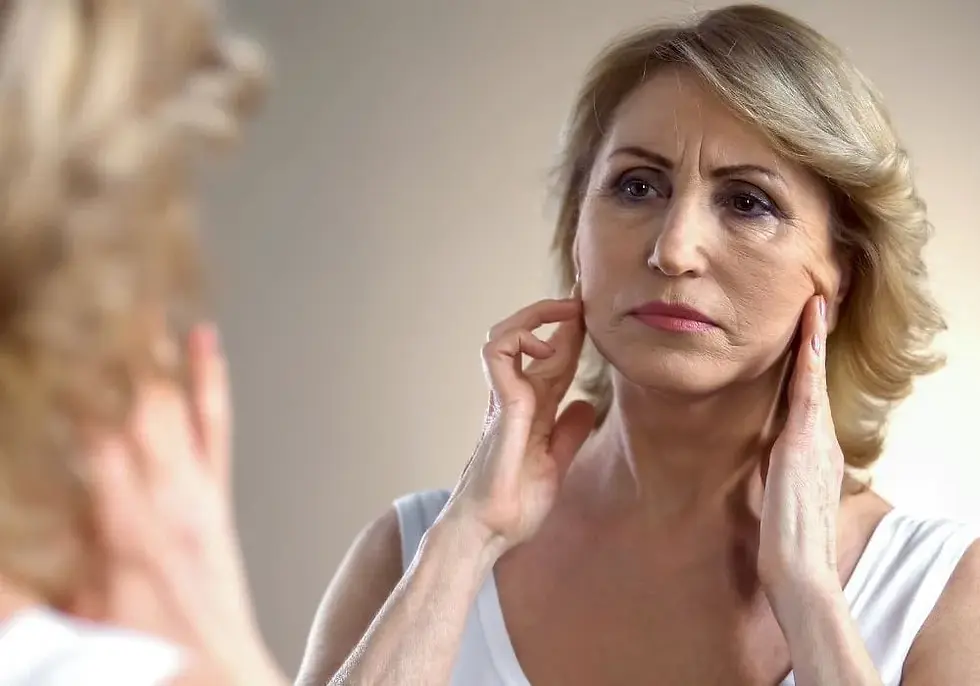
But most of the fear online leaves out an important detail: the medication itself is not directly “aging” your face. In most cases, the facial changes people notice are connected to rapid weight loss, muscle loss, dehydration, poor nutrition, and extreme calorie restriction happening all at once. The medication may help reduce appetite, but the way the weight loss is managed is what usually determines whether someone ends up looking healthy and refreshed or overly depleted.
The good news is that for many people, these changes are preventable. People who lose significant weight while still maintaining a healthy, balanced appearance are usually protecting muscle mass, eating enough protein, avoiding aggressive weight loss, and focusing on long-term habits instead of trying to lose weight as quickly as possible.
What Actually Causes “GLP-1 Face”?
When most people think about facial changes during weight loss, they assume it’s simply because fat disappears from the face. While that’s part of it, there’s actually much more happening underneath the surface.
Your face relies on several layers working together to maintain structure and fullness. Facial fat provides softness and volume, muscle helps support facial structure, and collagen and skin elasticity help everything stay firm and balanced. When weight loss happens too quickly, especially during periods of very low calorie intake, the body doesn’t just burn body fat in one specific area. It pulls from multiple tissues at once.
That’s why some people begin noticing hollow cheeks, more visible lines, loose skin, or a more tired appearance overall. In many cases, the face simply shows those changes earlier than other parts of the body because there’s less structural “buffer” there to begin with.

The Biggest Mistake People Make
One of the most common issues people run into on GLP-1 medications is pushing the process too hard. Many assume that eating as little as possible will lead to better or faster results, but that approach often backfires in the long run.
When appetite becomes overly suppressed and calorie intake drops too low, the body starts adapting to what it sees as a stressful situation. Recovery slows down, muscle breakdown increases, energy levels drop, and overall body composition can suffer. That’s often when people begin noticing dramatic facial changes.
A slower, more controlled pace of weight loss is usually much easier on the body. Sustainable fat loss tends to preserve muscle and skin quality far better than aggressive crash-style dieting. The goal shouldn’t be to lose the maximum amount of weight in the shortest amount of time. The goal is to improve health while still maintaining strength, energy, and overall appearance.
Why Muscle Loss Changes Your Appearance So Much
A lot of people focus only on the number they see on the scale, but weight loss and body composition are not the same thing. Two people can lose the exact same amount of weight and end up looking completely different depending on how much muscle they preserved during the process.
Muscle helps support the body’s overall structure, including the face. When muscle loss becomes significant, people often notice softer facial definition, hollowing around the temples or cheeks, and a more fatigued appearance overall. That’s one reason some people feel like they suddenly look older after losing weight too quickly.
This is why protein intake and resistance training become so important while using GLP-1 medications. The body needs consistent signals that muscle tissue is still necessary. Without those signals, it becomes much easier for lean tissue to break down during a calorie deficit.
Protein And Strength Training Matter More Than Most People Think
One of the best things someone can do while losing weight is prioritize adequate protein intake. Protein helps preserve lean tissue, supports recovery, and improves overall body composition during fat loss. Many people underestimate how difficult it is to maintain muscle when appetite is reduced, especially if meals become inconsistent or too small.
Strength training also plays a huge role. Walking and cardio are great for general health, but resistance training is what truly tells the body to hold onto muscle. Even a few consistent strength workouts each week can make a major difference in how someone looks and feels during weight loss.
People who combine protein intake, resistance training, proper sleep, and gradual fat loss often maintain a much healthier appearance compared to those relying on medication alone while barely eating.

Why Rushing Into Cosmetic Procedures Can Backfire
One mistake people sometimes make is panicking too early and immediately turning to fillers or cosmetic procedures while they’re still actively losing weight. The problem is that the face is often still changing during that phase.
As weight stabilizes and muscle mass improves, the face may naturally rebalance more than expected. Jumping into cosmetic treatments too soon can sometimes create unnatural results because the underlying structure is still shifting.
For many people, it makes more sense to first focus on stabilizing their weight, improving nutrition, rebuilding strength, and giving the body time to adjust. Once everything levels out, it becomes much easier to evaluate whether cosmetic treatments are even necessary.



Comments